

St Hilda's, is part of the Anglican Catholic Church within Australia. St Hilda's Parish believes, teaches and practices the authentic Christianity of the early Church, as expressed within the Anglican tradition. At present our parish has a small congregation. But, by God's mercy, we hope to grow in grace and numbers and spread the good news of who Jesus Christ is and what he has done for the human race. Welcome to our blog, feel free to contact us for more information. God Bless...
Monday, 25 April 2016

Friday, 8 April 2016
Enter Into His Wounds
“Peace be with you”,
when He had said this he showed them his hands and his side.
*The Following is a transcript of an oral sermon - presented by Fr Matthew to his Parish*

and the showing of the wounds? (The wounds in His hands and in His side). Jesus a few days before that had been crucified and nailed through the wrists and a spear had been thrust through his side, probably into his heart, to confirm that he was dead. He shows his apostles these wounds, in this room where they were hidden away because they were afraid. In their fear he says “Peace be with you” and immediately shows them the wounds.
So, is there a
connection?
Yes there is.
The first thing,
perhaps the more obvious thing, is that Jesus is confirming that it
is really him because it would have been difficult for them to
believe it. Even after every thing that's happened there's still this
doubt. We know on a number of occasions after the resurrection, even
with him right in front of them, sometimes they could hardly believe
it. It was just too good to be true. So, as St Thomas famously said
“I wont believe it until I see the wounds”. Even seeing Jesus in
front of him he would not believe until Jesus had shown him his hands
and side. For here Jesus is saying I really have risen, I am not a
ghost.
But there is a second
level, much deeper than the first.
It is not merely to
confirm his identity. “Peace be with you”
then he immediately shows them his hands and his side, the wounds
from the cross. We are told in Isaiah 53 that “He was wounded for
our transgressions, bruised for our iniquities” . This is a
prophesy concerning Christ from hundreds of years before. (This image shows: Isaiah 53 in the Great Isaiah Scroll, found at Qumran and dated to the 2nd century BCE).
 Our
forgiveness brings peace with God and peace within. Our forgiveness
is based on those wounds. So, there is this deep connection between
this peace that Jesus gives his disciples and the wounds from the
cross. We have been permanently reconciled, put back into God's
family and can know that calm sense of security that The Father's
love brings. That is our peace. That reconciliation, that re adoption
back into God's family knowing that fatherhood of God. That peace,
that reconciliation is based on the forgiveness of sins and that
forgiveness is based on those wounds. As it says again in Isaiah 53,
“He was wounded for OUR transgressions”.
Our
forgiveness brings peace with God and peace within. Our forgiveness
is based on those wounds. So, there is this deep connection between
this peace that Jesus gives his disciples and the wounds from the
cross. We have been permanently reconciled, put back into God's
family and can know that calm sense of security that The Father's
love brings. That is our peace. That reconciliation, that re adoption
back into God's family knowing that fatherhood of God. That peace,
that reconciliation is based on the forgiveness of sins and that
forgiveness is based on those wounds. As it says again in Isaiah 53,
“He was wounded for OUR transgressions”.
So, in the wounds of
Christ, he is carrying eternally the marks of the crucifixion, of His
sufferings. They are indeed an expression of who He is. Which is why
He emphasises them to the disciples to confirm His identity. Jesus is
eternally The Offered One, The Wounded One who has suffered for us
and understands and identifies with our suffering. He knows what it
is to suffer and yet He has conquered death and has the victory as
The Lord Of Life.
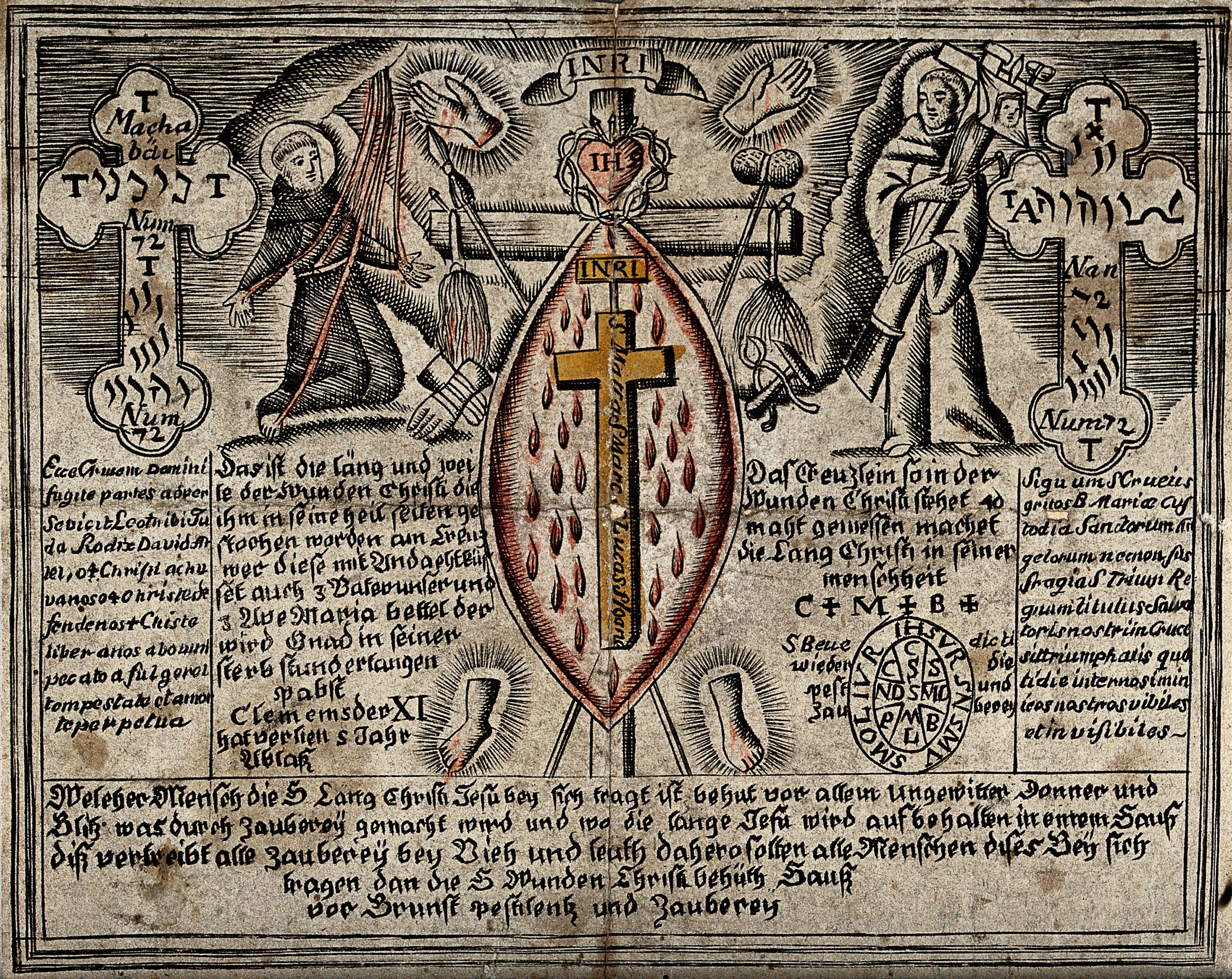
His wounds are a
prayer.
They are His
intersession.
Isaiah 53:
“Who has believed
what we have heard? And to whom has the arm
of the Lord been revealed? For he grew up before
him like a young plant, and like a root out of dry ground; he had no
form or comeliness that we should look at him,and no beauty that we
should desire him. He was despised and rejected by men; a man of
sorrows, and acquainted with grief; and as one from whom men hide
their faces he was despised, and we esteemed him not.” Of cause
here we have Christ and this is exactly how He was just before the
crucifixion. There He was before the people and Pilate said “Behold
the man” the man who has been scourged, the man who has the crown
of thorns upon his head. A man of sorrows acquainted with grief and
not beautiful any more but stricken.
And indeed the next
verse tells us:

“Surely he has borne
OUR griefs and carried OUR sorrows; yet we esteemed him stricken,
smitten by God, and afflicted.” at that point the people thought
God had rejected Him. Otherwise why was he suffering?
The next verse:
“But he was wounded
for our transgressions, he was bruised for our iniquities; upon him
was the chastisement that made us whole, and with his stripes we are
healed. All we like sheep have gone astray; we have turned every one
to his own way; and the Lord has laid on him the iniquity of us all.
He was oppressed, and he was afflicted, yet he opened not his mouth;
like a lamb that is led to the slaughter, and like a sheep that
before its shearers is dumb, so he opened not his mouth. By
oppression and judgement he was taken away;” and so we are reminded
of the trial and then the Way Of Sorrows. The Way Of The Cross. “and
as for his generation, who considered that he was cut off out of the
land of the living, stricken for the transgression of my people?”
Moving on to the tenth
verse:
"Yet it was the
will of the Lord to bruise him; he has put him to grief; when he
makes himself an offering for sin, he shall see his offspring, he
shall prolong his days; the will of the Lord shall prosper in his
hand; he shall see the fruit of the travail of his soul" (in
other words He will see the fruit of His sufferings) "and be
satisfied; by his knowledge shall the righteous one, my servant, make
many to be accounted righteous; and he shall bear their iniquities.
Therefore I will divide him a portion with the great, and he shall
divide the spoil with the strong; because he poured out his soul to
death, and was numbered with the transgressors; yet he bore the sin
of many, and made intercession for the transgressors."
So, Here is the Christ
wounded for our transgressions as we spoke of the wounds earlier,
bruised for our iniquities. In him therefore we are righteous.
There's this mysterious exchange. He takes on our sins, destroys it
at the cross and we are able to take on his righteousness.
We can in a spiritual sense enter into Christ
through His wounds, those openings in His flesh.
We can in a spiritual sense enter into Christ
through His wounds, those openings in His flesh.
How can we do this?
By meditation upon
those marks, those wounds. By thinking about them and knowing them as
our peace, our shelter. But there is more to it than that. There is a
Hymn found in the Book Of Common Praise (Hymn 120) that helps us
enter into those wounds, to enter into Christ through those wounds.
To meditate upon Christ's suffering and to allow those wounds he
suffered to impel us to action. It is a hymn by father Andrew (a
Franciscan Anglican from the 19th-20th century)
O dearest Lord, thy
sacred brow
with thorns was
pierced for me:
O pour thy blessing on
my head
that I may think for
thee.
O dearest Lord, thy
sacred hands
with nails were
pierced for me:
O send thy blessing on
my hands
that they may work for
thee.
O dearest Lord, thy
sacred feet
with nails were
pierced for me:
O send thy blessing on
my feet
that they may follow
thee.
O dearest Lord, thy
sacred heart
with spear was pierced
for me:
O shed thy blessing on
my heart
that I may live for
thee.
In the name of the father and of the son and of the holy spirit. Amen. †
Monday, 4 April 2016

Saturday, 2 April 2016
The Human Body - Gods Amazing Masterpiece
The Following is a transcript of an oral sermon - presented by Fr Matthew to his Parish
1 Thesselonians 4:1-8
(RSV)
Finally, brethren, we
beseech and exhort you in the Lord Jesus, that as you learned from us
how you ought to live and to please God, just as you are doing, you
do so more and more. For you know what instructions we gave you
through the Lord Jesus. For this is the will of God, your
sanctification: that you abstain from unchastity; that each one of
you know how to take a wife for himself in holiness and honor, not
in the passion of lust like heathen who do not know God; that no man
transgress, and wrong his brother in this matter, because the Lord is
an avenger in all these things, as we solemnly forewarned you. For
God has not called us for uncleanness, but in holiness.
Keep your own body in holiness and honour. †
The epistle for today (the Revised Standard Version which I read from) has an alternative reading, but it provides for the more anciently accepted one . Verse 4 which says “Each of you know how to take a wife for himself in holiness and honour” or more literally “how to control his own body in holiness and honour”. The first thing to note about this more ancient translation "keep your own body in holiness and honour" is this, the body is intended for honour. The body of a human being has intrinsic dignity, it is not a dirty or demeaning thing, but it has beauty and worth.
The Christian teaching on sexual morality is not based on hatred or contempt for the body. The human body is a wondrous thing, an amazing masterpiece that God created at the beginning of time. At the beginning of time for us he said, "It is very good”.
The second thing to note about this is that the body matters to the soul, it is one with it. It is really part of who we are, even if it is not the highest part of who we are. That verse says it is our own, “keep your own body in holiness and honour”. What we do to it and with it, even if nobody is obviously hurt by our doings, truly reflects on our spiritual health. Otherwise St Paul’s teachings on sexual morality would make no sense. He not only forbids adultery in this particular section and harming the brethren but he also prohibits fornication. So, even if there is no adultery. Where it appears nobody rights are infringed, So what he is saying is that what we do with the body does matter with the soul, that these two are integrated.
The reason sex and marriage go together is precisely this body-soul unity. What sex is physically for the bodies involved, the ultimate act of union, total, mutual, self giving. Marriage is for the person. The whole life, body and soul. Ultimate act of union, total mutual self giving. What that is physically tor the whole body and soul, for the whole person - that is marriage - if you think about it. Because what is marriage but the man and the woman saying “I am yours and you are mine”. There is that self giving and it is “till death do us part”. It is whole! It is total! and it is an act of union. What marriage is for the whole person body and soul, the sexual act is for the body. The two are related. When we separate them our integrity is damaged in both senses of the word. This is part of the reason for the church's teaching. It is not just that it says in the bible “Don't do it”, so don't do it. God has reasons for His commandments to do with our health – the health of our body, soul and spirit.
Our wholeness and inner harmony is broken when we break that unity. And thus our honesty is denied if something is said with the body that does not correspond with the commitment of the soul. That is why our integrity is damaged. Integrity means two things. It means both wholeness (everything working together) and it also means honesty. Both of these are affected when those two things are separated.
The third thing to note in this verse is that the body is to be subject to the reason, it says “keep your own body in holiness and honour” so the person is to use their reason and their conscience to subject their body. The properly formed conscience, the moral sense as part of our reasoning is meant to control what we do with our body. Uncontrolled passion or what St Paul calls the lust of prepubescence undermine our humanity and our bodies dignity. We are not mere animals operating solely by instincts. Our body is good, our body is important but is is not meant to override our soul. It is meant to express our highest life of the soul. Indeed the body keeps its honour by being subject to a soul which is subject to God's goodness .
That brings me to the fourth point of this verse and passage. The body is not just intended for honour, as wonderful as that is, but for holiness. “keep your own body in holiness and honour”. Because even better than subjection to a healthy soul is consecration to God. Being filled with the Holy Spirit. St Paul teaches not that our souls are the temples of the Holy Spirit. He says our bodies are temples of the Holy Spirit. So the Christian world view doesn’t separate soul and body. It doesn’t treat is as these angelic souls that just happen to have this annoying thing called a body, which sometimes gets in the way. Yet sometimes that is the way people think. Christians can sometimes think that way. That is not what God wants us to think when it comes to our body. Our body is not just this thing that weighs down the soul although it can do that. It is a thing of beauty and it meant to be in integral unity with our souls but of cause the greatest good for us is consecration to God, it is to be filled with the Holy Spirit. It is so our whole person becomes a temple of God and then we become involved in the highest life that there is because our body was meant to be instruments of God's loving will.
The fifth thing to note about this passage/verse is that these principles don’t just apply to sexual morality but to all aspects of our bodily existence. Our sleeping, our eating patterns, our exercise, our manual labour, all of this is affected by that principal that our body has an intrinsic dignity. Even the clothing we wear has a relationship to how we view our bodies. We belong to God, he wants the best for us, our body our soul and our spirit. It is in recognising these truths that we can make good descissions about the body. Including apparently small and trivial things like eating and sleeping patterns and so on.
Lets make our bodies temples Of God's Holy Spirit.
In the name of the father and of the son and of the holy spirit. Amen. †
Keep your own body in holiness and honour. †
The epistle for today (the Revised Standard Version which I read from) has an alternative reading, but it provides for the more anciently accepted one . Verse 4 which says “Each of you know how to take a wife for himself in holiness and honour” or more literally “how to control his own body in holiness and honour”. The first thing to note about this more ancient translation "keep your own body in holiness and honour" is this, the body is intended for honour. The body of a human being has intrinsic dignity, it is not a dirty or demeaning thing, but it has beauty and worth.
The Christian teaching on sexual morality is not based on hatred or contempt for the body. The human body is a wondrous thing, an amazing masterpiece that God created at the beginning of time. At the beginning of time for us he said, "It is very good”.
The second thing to note about this is that the body matters to the soul, it is one with it. It is really part of who we are, even if it is not the highest part of who we are. That verse says it is our own, “keep your own body in holiness and honour”. What we do to it and with it, even if nobody is obviously hurt by our doings, truly reflects on our spiritual health. Otherwise St Paul’s teachings on sexual morality would make no sense. He not only forbids adultery in this particular section and harming the brethren but he also prohibits fornication. So, even if there is no adultery. Where it appears nobody rights are infringed, So what he is saying is that what we do with the body does matter with the soul, that these two are integrated.
The reason sex and marriage go together is precisely this body-soul unity. What sex is physically for the bodies involved, the ultimate act of union, total, mutual, self giving. Marriage is for the person. The whole life, body and soul. Ultimate act of union, total mutual self giving. What that is physically tor the whole body and soul, for the whole person - that is marriage - if you think about it. Because what is marriage but the man and the woman saying “I am yours and you are mine”. There is that self giving and it is “till death do us part”. It is whole! It is total! and it is an act of union. What marriage is for the whole person body and soul, the sexual act is for the body. The two are related. When we separate them our integrity is damaged in both senses of the word. This is part of the reason for the church's teaching. It is not just that it says in the bible “Don't do it”, so don't do it. God has reasons for His commandments to do with our health – the health of our body, soul and spirit.
Our wholeness and inner harmony is broken when we break that unity. And thus our honesty is denied if something is said with the body that does not correspond with the commitment of the soul. That is why our integrity is damaged. Integrity means two things. It means both wholeness (everything working together) and it also means honesty. Both of these are affected when those two things are separated.
The third thing to note in this verse is that the body is to be subject to the reason, it says “keep your own body in holiness and honour” so the person is to use their reason and their conscience to subject their body. The properly formed conscience, the moral sense as part of our reasoning is meant to control what we do with our body. Uncontrolled passion or what St Paul calls the lust of prepubescence undermine our humanity and our bodies dignity. We are not mere animals operating solely by instincts. Our body is good, our body is important but is is not meant to override our soul. It is meant to express our highest life of the soul. Indeed the body keeps its honour by being subject to a soul which is subject to God's goodness .
That brings me to the fourth point of this verse and passage. The body is not just intended for honour, as wonderful as that is, but for holiness. “keep your own body in holiness and honour”. Because even better than subjection to a healthy soul is consecration to God. Being filled with the Holy Spirit. St Paul teaches not that our souls are the temples of the Holy Spirit. He says our bodies are temples of the Holy Spirit. So the Christian world view doesn’t separate soul and body. It doesn’t treat is as these angelic souls that just happen to have this annoying thing called a body, which sometimes gets in the way. Yet sometimes that is the way people think. Christians can sometimes think that way. That is not what God wants us to think when it comes to our body. Our body is not just this thing that weighs down the soul although it can do that. It is a thing of beauty and it meant to be in integral unity with our souls but of cause the greatest good for us is consecration to God, it is to be filled with the Holy Spirit. It is so our whole person becomes a temple of God and then we become involved in the highest life that there is because our body was meant to be instruments of God's loving will.
The fifth thing to note about this passage/verse is that these principles don’t just apply to sexual morality but to all aspects of our bodily existence. Our sleeping, our eating patterns, our exercise, our manual labour, all of this is affected by that principal that our body has an intrinsic dignity. Even the clothing we wear has a relationship to how we view our bodies. We belong to God, he wants the best for us, our body our soul and our spirit. It is in recognising these truths that we can make good descissions about the body. Including apparently small and trivial things like eating and sleeping patterns and so on.
Lets make our bodies temples Of God's Holy Spirit.
In the name of the father and of the son and of the holy spirit. Amen. †
Sunday, 27 March 2016
Easter Sunday Photos 2016
We hope you enjoy the photos of our Easter Sunday service...
They are in no particular order. Click images to enlarge.
(taken on a cheap mobile phone so apologies for poor quality)
GOD BLESS and HAVE AN AWESOME EASTER SUNDAY
...CHRIST HAS RISEN INDEED...


Lighting The Paschal Candle 2016
 Father Matthew Kirby during the lighting of the Paschal Candle on Easter Sunday Morning at St Hilda's Parish of the Anglican Catholic Church in Maitland NSW Australia 2016.
On the Paschal Candle, the cross is always the central symbol. Ours also shows the Greek letters alpha and omega, the beginning and the end (from the Book of Revelation).
Here Father Matthew is seen piercing the actual candle with the five "nails, representing the five wounds of Jesus: the three nails that pierced his hands and feet, the spear thrust into his side, and the thorns that crowned his head.
"Pasch" comes from the Hebrew word "pesah," meaning deliverance or Passover. This candle represents the risen Christ whose light dispelled the darkness (death), and the splendour and glory of His resurrection.
The Paschal candle is the first candle to be lit on Easter Sunday, representing the light of Christ coming into the world. This represents the risen Christ, as a symbol of light (life) dispelling darkness (death).
"The light of Christ, rising in Glory, dispel the darkness of our hearts and minds."

"The light of Christ. Thanks be to God".

Photos and text supplied By Di Mathews (Church warden and blog admin)
Wednesday, 23 March 2016
Palm Sunday 2016
* The Following is a transcript of an oral sermon
presented by Fr Matthew to his Parish
during Mass on Palm Sunday 2016

On the original Palm Sunday Jesus has only recently raised Lazarus and His fame and favour with many of the people is great. Their expectations including those of the disciples are high. Jesus refuses to rebuke this well meant praise despite the demands of the Pharisee on that original Palm Sunday. Despite the imperfect motives, the imperfect understanding laying behind all the shouting and the singing because there is truth in their words and there is love in their hearts for He is the king, son of David. "Blessed is He that cometh in the name of the Lord", For blessed indeed is the one who bares the name of God, the very son of the almighty father. The one who carries his authority and power and yet there is the donkey. A mere donkey.
Jesus will not give himself over to the people and their nationalistic and political desires because as St John tells us "He knew what was in a man". So even here in the midst of that original Palm Sunday procession we see the humility and gentleness of the man Jesus. Not a false modesty that would deny his kingship, for He is a king. But a gentle witness of the true nature of His mission. He comes to serve, even to the point of sacrificing himself. The aim of Jesus is to please and obey the Father, He does not thirst for the praise of men. His deepest desire is to fulfil the will of the one who sent him. As the epistle for today tells us "Christ although God by nature emptied himself and took upon the form of a servant. Being found and fashioned as a man he humbled himself and became obedient unto death. Even the death of the cross". So, we heard today from Philippians.
Our prayer book and the King James version of the bible also says "He counted not a prize to be equal with God" but a better translation of the Greek is "He did not see the equality with God something to be grasped or to be desperately held onto" in other words He did not cling to power or the divine prerogative of visible majesty. There is no sense of insecurity or vulnerable pride about the Son Of God for knowing who He is and what he is about to do he has emptied himself in the sight of men and has focused on doing the will of The Father from a pure heart motivated only by love.
This is the man we meet in the Gospels. This is the Lord we need to get to know better and better. He is the triumphant king but he is also the humble one who rides on a donkey.
Todays epistle begins with the words "Let this mind be in you which was also in the mind Jesus". It can be so easy for us to, unlike Jesus, seek the approval and praise of people above all things. Sometimes we might want to be seen as nice or clever or kind or talented or morally upright or some combination of these things. We are not be too concerned if they would think these things of us if they could see into our hearts like God can, better they think well of us then truly.
There is a litany that is called the Southwell Litany that says " praise the Lord and deliver us from the comfort of self deception in persuading ourselves that others think better than the truth of us". One is reminded of the title of a popular English comedy "Keeping up appearances". It is easy for us to spend our time thinking about what others think of us. There is a Christian psychologist that said "we'd spend less time worrying about what others think about us if we realised how little they do".
Another temptation for us is to rest in an appraisal of ourselves based on a tallying up of our good works without reflecting on the imperfect motives that may underlay the works or the many failings that may out way them (in other words, selective memory. Remembering the good and not the bad). In other words there is the temptation in seeing ourselves just as superficially as we would like our friends to. Or we might be tempted to worry unduly about our comfort, our security, our safety, anxious about unknown future and the calamities or crisis it could bring. But if we are to retrain our minds to have the mind of Christ we must empty ourselves as He did, of these trivialities, deceptions, detours.
Let us be like Jesus focusing on The Father.
Focusing on pleasing The Father and giving Him glory.
Pleasing man and
glorifying ourselves is of cause such an ultimately self defeating
and obviously foolish exercise that one might wonder how we are taken
in to begin with. The solution lies not in despair at our spiritual
stupidity but in forgetting ourselves all together, as it were. Let
us have the mind of Christ, the mind which is emptied of all self
obsession whether it be in the form of self congratulations , self
preservation, or concern for the esteem of others. Instead we must
fill our minds with love for God and a desire to please Him trusting
in his plan for us and resting in the fact that his gracious
acceptance of us is not based on anything we can do for ourselves,
not based on anything we think of ourselves and much less is it based
on the appraisal of others. He just loves us. Our security, in fact
and in feeling and therefore our deliverance from the fears and
temptations of pride is found in the cross.
When our thoughts
wander into the desert of self, may God help us to return our minds
to that oasis where at the tree of Calvary those lovely palm branches
will shade us from shame and fear and Christ will give us to drink of
himself of the water of life.
Monday, 21 March 2016
Holy Week Services
Everyone is invited to join us for Holy Week
Maundy Thursday:
6pm priest available for Confessions
7pm Mass followed by Footwashing, Stripping of the Altars and Prayer Vigil.
Good Friday:
10am Veneration of the Cross and Communion,
12 noon Stations of the Cross,
1pm available for Confession again.
Easter Sunday:
11am Lighting of the Paschal Candle and Mass.
To understand Holy Week better try this Wikipedia link- https://en.wikipedia.org/wiki/Holy_Week.
Thursday, 10 March 2016
Mothering Sunday
* The Following is a transcript of an oral sermon presented by Fr Matthew to his Parish
Today is known as Mothering Sunday by the church
and it is because of this verse in the epistle,
“Jerusalem above is free, which is the mother of us all”.

Leaping off from that verse, the church centuries ago in the west and especially in Britain made the 4th Sunday in Lent “Mothering Sunday”. It was also called “Refreshment Sunday” because one of the traditions they have in England was to have a special cake on that day and the rules of Lent had laxed a bit more and you could use your eggs and things to make a cake and so on. So it was “Refreshment Sunday”. In some churches they even have different colours on Lent 4 instead of being straight violet they have a rose colour.

A day in honour of mothers should be about more than just that day. It is a reminder to us just how important mothers are. In the epistle today Saint Paul is talking about the Jerusalem which is above. He is talking about the heavenly Jerusalem. That which is the true archetypal map after which the earthly Jerusalem is meant to be copied and so it represents the church. Especially the church in her heavenly reality and in the height of her spiritual reality. It is interesting, in 2 Timothy chapter1 verse5, Saint Paul talking to his young disciple Timothy who's become a bishop in the church he has been left in, he says: “What a rich faith has been handed down to you by your grandmother Lois to your mother Eunice then to you”. So, there Saint Paul is referring to the important role of the earthly mother who brought up her daughter in the faith who then brought up her son Timothy in the faith and he went on to become another (sort-of) apostle, becoming a bishop in his local church and Saint Paul had made him his right-hand man one time.

A little boy forgot his lines in a Sunday school play so his mum leaned over and whispered “I am the light of the world”. The child beamed and with great feeling announced “My mother is the light of the world”. He misunderstood. She was just trying to help him out but never mind. Now, we smile but the truth is mothers DO write on the hearts of their children what the hand of time can't erase.

A fellow called Caswald said: “ it is only in later life that men gaze back and would behold how a mother hand and heart shaped their lives and destiny”. But, the question for the rest of us is: Are we properly grateful for the love and care our mothers have shown us, continuing to be there for them as long as they live? That is a problem in our culture. The problem in our culture is that many people don't feel that obligation to their mother after they leave home thinking “well, that's that done, I'm out of home now” and in later life when their mother might need them they feel “well, you know. I've got my own life now”. That is the expression you hear.
 Do we continue to draw upon the true lessons of what our mothers taught us and the good examples they gave us? The 5th of the 10 commandments demands that we do this calling on us to honour our parents. This is the promise with a reward attached that Saint Paul reminds us in Ephesians6 verse2. So, honouring parents is important all through life. Similarly the book of proverbs tells us in the 1st chapter not to neglect our mothers teaching and finished in chapter 31 with a whole chapter which is wise advice from a mother to her son. The mother advises her son on things like leadership responsibility, compassion, justice and relationships in general. The scriptural portraiture of motherhood is a very dignified one indeed. It is implicitly and repeatedly used as an analogy of how the church and our lady relate to us as spiritual children in the New Testament. We heard that today in the epistle I quoted in the beginning, where the Jerusalem above (as I said) refers to the church.
Remember at the cross Jesus says to his mother: “Behold, your son” talking of the one disciple who had some courage, courage enough to be the one apostle at the cross. Then he says to that disciple, who I believe represented the disciples at that point: “Behold, your mother”.
 We see a very interesting chapter in the very last book of the bible, Revelations12, which again relates to a mother: “And a great portante appeared in Heaven and a woman clothed with the sun and the moon under her feet and on her head a crown of 12 stars. She was with child and she cried out in her pangs of birth in anguish of delivery” and it goes on and talks about how there is a great dragon ready to attack the mother and child. “The dragon stood before the woman who was about to bare a child, that he might devour her child when she bought it forth. She bought forth a male child, one who is to rule all nation with a rod of iron. But her child was called up to God and to His throne”. This is a reference to Jesus because one of the scriptural phrases in the Old Testament, One of the prophesies of the messiah is that he would rule the nations with a rod of iron. In other words that He would be the true and complete ruler, and that people would owe Him total obedience. It says that He is called up to God and His throne, that refers to the ascension, “And the woman fled into the wilderness as a place prepared by God” and then it goes on and talks about war in heaven. It is interesting that just before this chapter (and of cause there were no chapter divisions when John first wrote this, we added them later) it talks about God’s temple in Heaven and how the “Arch Of The Covenant” is seen within the temple of God in Heaven and there are flashes of lightening and voices and peals of thunder. So, people have debated what this symbol of a woman represents. Clearly she represents more than one thing. We thought, she can’t be separated from Mary, this is the woman that brings forth Jesus, but neither can she be separated from the church because it says she has a crown of twelve stars and the moon under her feet, clothed in sun. These are references which remind us back in the Old Testament of some of the prophetic visions of Joseph. He saw his brothers as 12 stars and his mother and father as the sun and moon, and they bowed down to him. So, the sun and moon and the 12 stars represent Israel and in the New Testament Israel represents the church. So, we have a double reference here to our church and to Our Lady. We know that Mary herself, for a little while, had to flee into the wilderness because she fled into Egypt.
1John 4:16 “We have known and believed the love that God has for us”. We trust in God’s parental love, that’s at the foundation of our faith. We cannot in our weakness and sin love the God that is merely the just judge, or omnipotent, omniscient, all knowing, all powerful. We can’t even love that God which is all perfect goodness in our weakness and sin until we know more, until we know God is not just this high and mighty one but that He is a loving father. A God that is only the just judge, perfect goodness, the almighty, the all knowing would be too high, too terrifying in His inaccessible holiness. We could at most admire Him in the abstract as an idea, but the Living God can only joyfully be known by us fallen human beings as we encounter Him as Father. But This father has maternal aspects as well.

What is the fundamental difference in the final analysis between one who has the gift of living faith and who has rejected it? Well, the one who has that gift accepts God as a merciful Father, trusts in the son as a perfect image of the Father and repents of their offences against the holy love of the Father and the Son which is revealed in the cross. That person receives the holy spirit to become what they were meant to be. A loving and beloved child of God. Those that finally reject the living faith falsely see God as cruel and hard because he reprimands their sin and so they come to experience Him exactly as their warped inwardly enclosed hearts portray Him.

Let none of us consider ourselves abandoned in this world - Look Up.
Have faith in Christ and know that He is of adoption.
Our salvation is more than once compared in the scriptures to adoption.
We are children of God the Father.
We are adopted in Christ the Son because we are incorporated into Him.
Rest in the knowledge that Gods heart towards us is a fathers heart.
The trials and disciplines of life are our formation,
our upbringing in grace, they are not for our destruction.
Take joy in the motherhood of the church and the Blessed Virgin,
recognising that they look after us through fellowship and prayer.
We must not forget to honour, as well, our earthly mothers
with kindness and honest gratitude and appropriate respect
whatever their imperfections.
Have faith in Christ and know that He is of adoption.
Our salvation is more than once compared in the scriptures to adoption.
We are children of God the Father.
We are adopted in Christ the Son because we are incorporated into Him.
Rest in the knowledge that Gods heart towards us is a fathers heart.
The trials and disciplines of life are our formation,
our upbringing in grace, they are not for our destruction.
Take joy in the motherhood of the church and the Blessed Virgin,
recognising that they look after us through fellowship and prayer.
We must not forget to honour, as well, our earthly mothers
with kindness and honest gratitude and appropriate respect
whatever their imperfections.
St Paul teaches we cannot disrespect and despise our family
and claim to believe in and love God at the same time. He talks about someone who doesn’t take care of their parents or their own family and he says that they are denying their faith and are worse than infidels. It is one of the more intense condemnations that you find from Saint Paul. So, we cannot neglect and despise our own family. Part of our love for God and love for our neighbour starts with our own parents, our children, our brothers and sisters.
In the name of the Father and of the Son and of the Holy Spirit. Amen. †
Join us for worship and prayer at an Anglican Catholic Mass / Holy Communion each Sunday morning at 11am in the chapel of the All Saints Senior School in Victoria St Maitland NSW Australia... Happy Mothering Day
Saturday, 27 February 2016
Devilish Temptations.
 The Following is a transcript of an oral sermon
presented by Fr Matthew to his Parish during Lent.
Why do we fast?
We fast during Lent to
maintain a discipline that will allow us to be in control of our
bodies, rather than our bodies being in control of us. At first sight
it would appear that Jesus' fast made him more vulnerable as it was
so extreme (40 days and 40 nights) that it seemed to give the devil
an opening.
Starting with the issue
of food.
The first thing Satan
says is “If you're the son of God, command that these stones be
made bread”, but Jesus through His suffering obedience was too
strong for Satan. Jesus here reverses the original sin, by overcoming
a more intense version of the original temptation. In the story (in Genesis) of
that first temptation and that first human sin, the tempter Satan
brings Eve to the point of tasting the forbidden fruit, the knowledge
of good and evil. What Jesus experiences here is related to what Eve
experienced back then.
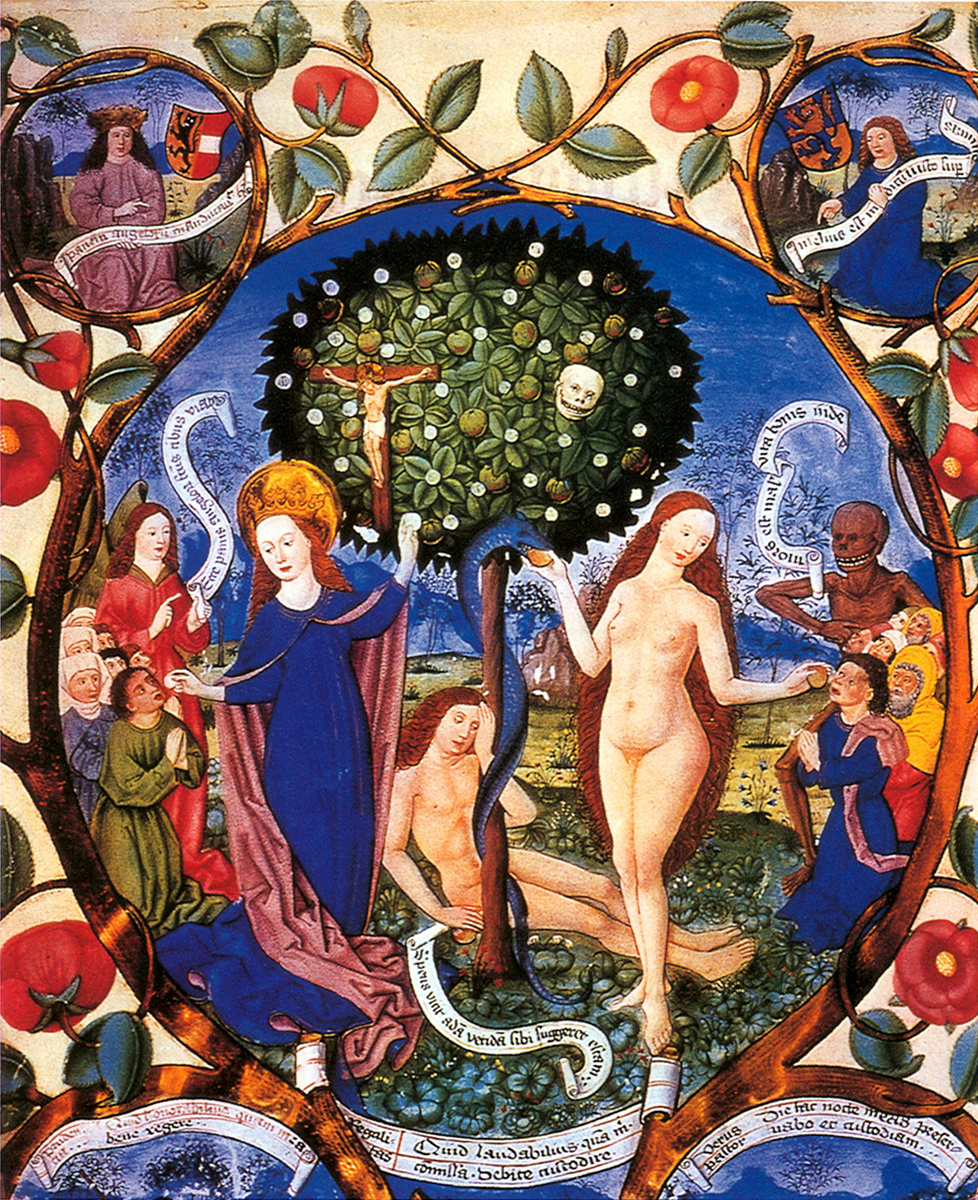
Note that:
First – Jesus is
tempted by food, just as Eve was. He is asked to turn stones into
bread and Eve was tempted by the fruit of the tree, which we are told
in Genesis was good to eat.
Second - Satan wants to
put doubt into Jesus' mind in persuading Him to test Gods' promise to
look after Him. He says, “IF you are the son of God, command that
these stones be made bread”, so it's not just about food, it is
about trying to make Him doubt His very identity and His relationship
with the Father. In His weakened state the Devil is looking for an
opening that he might foster doubt (the lack of faith in God). Now,
this is exactly what Satan did to Eve back at that first temptation.
Such a test would only be necessary (the test of God) if you had
doubts in the first place. The Devil is tempting Jesus to test God,
of cause that wouldn't be necessary unless you doubted whether God
was going to do it. So, it is all about doubt and back in Genesis the
tempter asks Eve “DID God really say?”. Then later on when he is
told what God really said (which he know of cause), he says “No you
won't really die”. So, it is about doubting Gods' word, it is not
just about food.
Third – There is an
offer of glory. The Devil says “I'll give all this to you, all the
kingdoms of the world, all their glory if you worship me”. Well,
Eve was also tempted with glory. The tempter says to her “you'll
become like Gods, knowing good and evil”. There is this parallel
between the first great temptation of humanity and this temptation of
Christ in the desert.

Now, speaking of our
ancient parents (this story and the connection between them).
A
little boy once opened a big family bible with fascination. He looked
at the old pages as he turned them and something fell out of the
bible. He picked it up and looked at it closely. It was an old leaf
from a tree that had been pressed between two pages (People used to
do that with flowers and leaves and things). “Mummy look what I’ve
found” the boy called out. “What have you got there dear?” his
mother asked. The astonishment in the young boys voice answered “It's
Adams suit!”. We heard this morning at the end of the Genesis
reading how their eyes WERE opened and they knew they were naked,
suddenly other temptation had come in that had meant nothing to them
before. Their bodies had been under the control of their minds before
and that would no longer be the case and so they made primitive
clothing for themselves.
But - back to Jesus'
temptation,
We might be tempted to
say “well, that's fine for Jesus because He is God as well as man
but what about us?” However it was Jesus' humanity that had to
undergo the trials and if we have faith in Christ He lives in us. He
does strengthen us. He strengthens our humanity through His humanity
by that divine strength. He is the bridge between God and man. So, we
don’t need to say “But that is fine for Jesus but it doesn’t
mean anything for us” because indeed the strength that He brings to
temptation is a strength that we can draw upon also through faith and
love .
So can we also learn
from His example and directly imitate it?
Well, Yes... The
likelihood of us facing the exact same temptations as Jesus is none.
However the principles underlying Jesus spiritual self defence are
universal. So we will face DIFFERENT temptations to Jesus but we can
resist the temptations in the same way that he did. The first thing
to note, the first principal of spiritual self defence is that we
need God more than anything or any one else. So, commitment to Him
comes first. Jesus says to the Devil “ Man does not live by bread
alone, but by every word that proceeds from the mouth of God” and
Jesus says “You will worship the Lord your God alone” He draws on
that word of God to say that God comes first. It is on that bedrock
principal that God is number one in our lives that enables us to put
everything else into perspective and to resist temptation. The second
principal that is illustrated in what Jesus does is that we can trust
God to meet our needs so we don't need to be testing Him as Jesus was
asked to do by the Devil, or wait for proof before we act upon His
word or believe in His promises. Unbelief in His promises feeds into
sin because it takes away our confidence to fight a good fight.
Resisting temptation is like a fight. To fight we need to have
confidence. A soldier who has no confidence can't fight. For we have
to trust God knowing that He will meet our needs. The Devil is trying
to meet Jesus' need in a perverted sort of way. Jesus is hungry, so
he says “alright, test God and prove you are who you really say you
are and that He really loves you by turning these stones into bread”
Knowing that Jesus is here to save the world he says “I will give
you the world, I will give it up, you can have it as long as you
worship me.” You might say, the temptation of the short cut to do
evil that good may result. A temptation that is always with mankind.
To do something that is wrong because “ohhh, it might be bad but
something good will result from it” but all of this is based on
distrust. The idea that we can't trust God to meet our needs and
achieve His will the right way without resorting to sin.
So Number one – we
need to put God first.
Number two - we have to
trust Him to be the one to meet our needs.
Number three – we
belong to God. We don't belong to even ourselves and we certainly
don't belong to the Devil. God owns us and only He is absolutely
entitled to our service.

Jesus says to the Devil
“ It is written, you shall worship the Lord your God and HIM only
shall thou serve” God is not only number one FOR us but He is the
one we belong to. We are already His. Only He has absolute rights
over us because He created us and then He redeemed us. So to resist
temptation we must remind ourselves that what God offers is
infinitely better than what the Devil offers and unlike the Devil God
actually keeps His promises. We are Gods' anyway so we may as well
act like it. In keeping these things in mind we resist temptation.
The thing to realise about the Devils temptation is that the Devil is
a good liar. A clever liar. He will speak things that are with an
element of truth in them but then pervert them. When he said to Eve
“when you eat you shall not die” physically it was true. Eve did
not die that day she ate the fruit. But she did die spiritually. It
was a spiritual death that took place.
When Satan comes to Jesus he
quotes from the scripture and tries to use it to achieve his will.
So, the thing about temptation is that is not all about the obvious
lie. It can be about the subtle lie. Never the less, we can make
those distinctions between the truth and falsehood if we trust God,
put Him first and understand that we are His already. We just need to
live in that reality.
Subscribe to:
Posts (Atom)